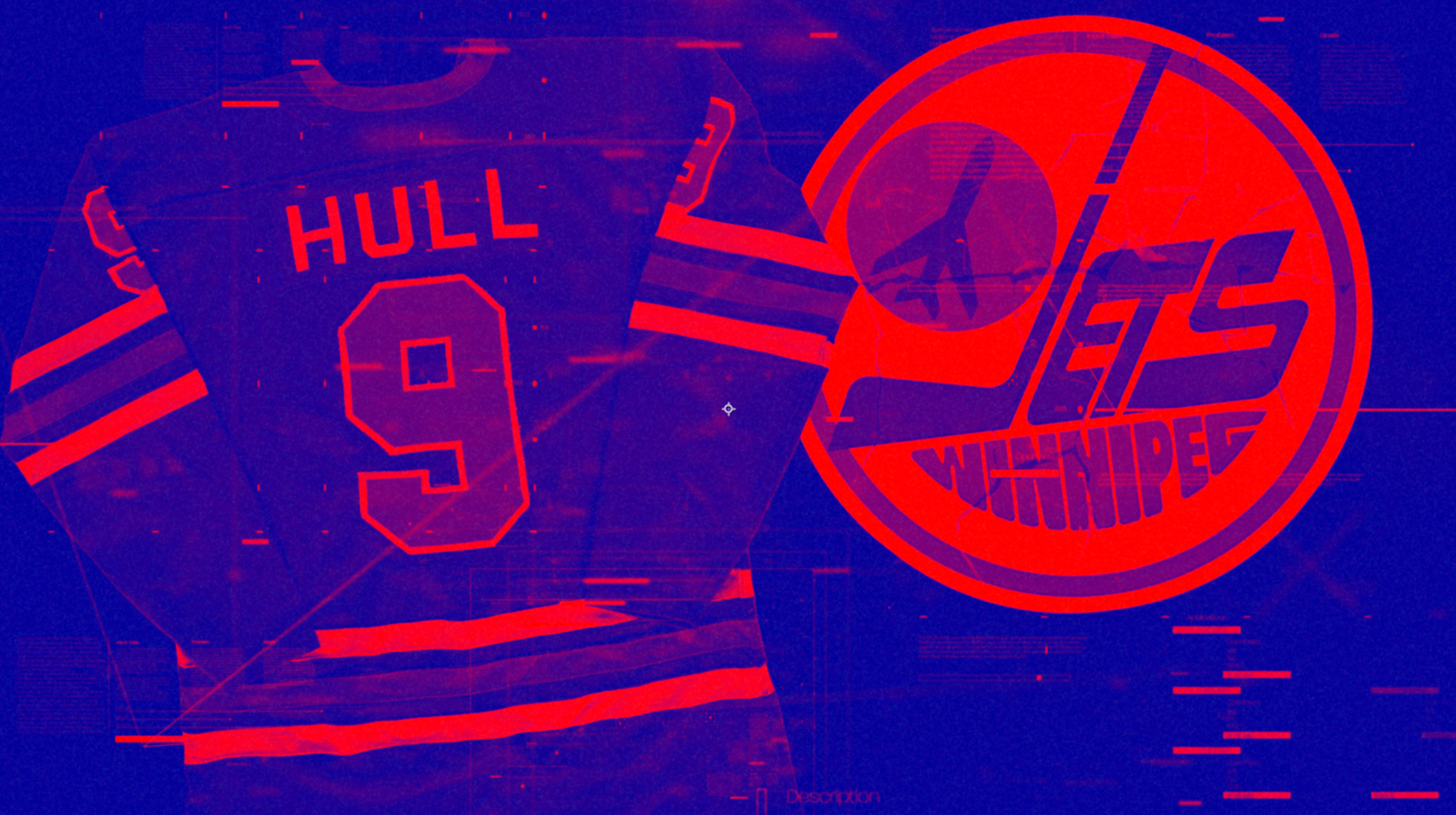
The Winnipeg Jets began as one of the original World Hockey Association franchises in 1972, rising quickly to become the most dominant team in the WHA. But, after joining the NHL in 1979 they immediately faced major growing pains, and struggled to recapture their WHA glory. So what turned a once powerhouse team into a struggling NHL franchise that would eventually leave Winnipeg in 1996? In today’s video we break down the rise, fall, and rise again of the Winnipeg Jets.
Birth Of The Jets
On December 27, 1971, Winnipeg was awarded one of the founding franchises in the World Hockey Association (WHA). The team was owned by local businessman Ben Hatskin, who had built his fortune in cardboard shipping containers. Hatskin revived the name “Winnipeg Jets,” which was previously used by his Western Canada Hockey League club.
The Jets quickly made headlines with their early signings. Norm Beaudin became the franchise’s first player in 1972, earning the nickname “the Original Jet,” while Ab McDonald was named the team’s first captain. The most significant move, however, came when the Jets signed superstar Bobby Hull. Already known as “the Golden Jet,” Hull received a groundbreaking deal that included a $1 million signing bonus and a total value of at least $2.5 million. In an interesting move by the league, his salary was partially paid for by all of the WHA teams. In the league’s view, convincing him to join the Jets would instantly give the upstart league credibility. Hull would remain with the Jets through 1979, serving as both a player and coach during this time.
The Jets also became pioneers in scouting European talent at a time when North American teams largely ignored overseas players. Their most notable additions were Swedish forwards Anders Hedberg and Ulf Nilsson, who joined Hull to form one of the most dynamic lines in hockey history, famously known as “the Hot Line.” On defense, Lars-Erik Sjoberg emerged as a leader, eventually becoming team captain and earning recognition as one of the WHA’s top defensemen.
The Jets played their first WHA game on October 12, 1972, against the New York Raiders at Madison Square Garden. The lineup included Ab McDonald, Joe Daley, Dunc Rousseau, Duke Asmundson, and Bill Sutherland. McDonald scored the first goal in franchise history, marking the beginning of a highly successful run for the team.
Over the course of the WHA’s existence, the Jets established themselves as its most dominant franchise. They reached the league finals in five of its seven seasons and won the Avco Cup three times. Their first championship came in the 1975–76 season, led by Hull, Hedberg, and Nilsson. That team was notable for its heavy reliance on European players, marking a turning point in how North American teams viewed international talent.
The Jets remained a powerhouse throughout the league’s short lifespan, winning additional championships in back to back years between 1978 and 1979. Their final title came against a young Edmonton Oilers team that featured future legend Wayne Gretzky, where the Jets defeated the Oilers 4 games to 2.
The Jets’ success in the WHA left a lasting legacy. Their Avco Cup-winning teams from 1976, ‘78, and ‘79 were later inducted into the Manitoba Hockey Hall of Fame. The 1976 championship was particularly significant, as it marked the first major professional hockey title for Winnipeg since the Blue Bombers’ 1962 Grey Cup victory. Even with all the success Winnipeg was having, by the late 1970s, the WHA was struggling to survive. Several teams had already folded, relocated, or faced mounting financial losses. At the same time, player salaries were rising quickly and several franchises were operating deep in the red, making long-term stability increasingly difficult. What had started as an ambitious rival league to the NHL was now fighting just to stay afloat, with its strongest remaining teams, like the Jets, trying to hold everything together.
Jets Grounded Fast
By the 1978–79 season, most of the WHA teams had already folded, with six teams remaining. When the National Hockey League and the WHA agreed to merge in the summer of 1979, the terms of the deal only allowed for four of the six teams to join the NHL for the following year. This meant that the Jets, alongside the Quebec Nordiques, Edmonton Oilers, and Hartford Whalers were now a part of the NHL, with the remaining clubs, the Cincinnati Stingers and Birmingham Bulls folding. Pre-merger exhibition games had given the Jets confidence they could compete with most NHL teams, with the only clear exceptions being elite clubs such as the Montreal Canadiens, who were three-time defending Stanley Cup champions, and the much improved New York Islanders.
Despite their strong roster, the Jets and their fellow WHA teams paid a heavy price to enter the NHL. As part of the 1979 expansion draft, they were forced to leave three of their top six scorers unprotected, effectively stripping away much of the core that had just won the final WHA championship. In addition, Winnipeg was placed near the bottom of the draft order, selecting 18th out of 21 teams. One of the key decisions during this transition was the protection of defenceman Scott Campbell, a promising young player from the WHA era. Unfortunately, Campbell struggled with chronic asthma, a condition that was worsened by Winnipeg’s cold climate. His health issues eventually forced him out of professional hockey entirely by 1982.
Upon entering the NHL, the Jets were placed into the Smythe Division within the Campbell Conference. However, the loss of key players left the roster severely weakened. As a result, Winnipeg struggled immediately, finishing at the bottom of the league standings in each of their first two NHL seasons. The 1980–81 season was particularly difficult, as the Jets recorded just nine wins, a performance that remains one of the worst in franchise history. Although the Jets struggled on the ice, their poor early performance did provide an opportunity to rebuild through the draft. In 1980, they selected defenceman Dave Babych second overall, and in 1981 they used the first overall pick to draft Dale Hawerchuk, who would go on to become a franchise cornerstone and Hall of Fame player. These additions helped establish a new core that also included Thomas Steen, Paul MacLean, Randy Carlyle, Laurie Boschman, Doug Smail, and David Ellett.
Around the same time, in 1981, the NHL realigned divisions, placing Winnipeg into the Norris Division with other Central Time Zone teams. However, after just one season in the Norris Division, the relocation of the Colorado Rockies to New Jersey resulted in further realignment, sending the Jets back to the more difficult Smythe Division. There, Winnipeg was grouped with the Edmonton Oilers and Calgary Flames, two of the most dominant teams during the mid-to-late 1980s. The playoff structure at the time made the challenge even greater. The top four teams from each division qualified for the playoffs, with the first round consisting of division semifinals where the first seed played the fourth seed and the second played the third. The winners advanced to the division finals, and the two division champions met in the conference finals. As a result, even successful regular-season teams were often forced into early matchups against divisional powerhouses. For Winnipeg, this frequently meant facing either Edmonton or Calgary early in the postseason, making deep playoff runs extremely difficult.
A clear example came in the 1984–85 season. The Jets finished with the fourth-best record in the entire NHL, behind only the Philadelphia Flyers, Edmonton Oilers, and Washington Capitals. They also earned 96 points, which remained the franchise’s highest point total as an NHL team for the next 25 years. Despite the strong performance, Winnipeg finished second in the Smythe Division behind Edmonton. In the playoffs, they defeated Calgary in the division semifinals in four games but were then swept by the Oilers in the division finals. Edmonton would go on to win the Stanley Cup that year, their second in a row.
This pattern repeated itself throughout the decade. Between 1983 and 1990, the Jets and Oilers met in the playoffs six times. Edmonton won every series, holding Winnipeg to just four total victories across those matchups. During that same span, the Oilers captured five Stanley Cups (1984, 1985, 1987, 1988, and 1990), showcasing just how difficult Winnipeg’s postseason path was. It was not until the 1993–94 season that further league expansion and restructuring moved the Jets into the Central Division of the Western Conference. By that point, however, the NHL had become more balanced across divisions, and the strict divisional playoff format had been replaced, reducing the frequency of such repeated early-round matchups against dominant rivals.
I just want to pause real quick to ask, if you are enjoying this video so far please hit the like button and don’t forget to subscribe. Ok, let’s get back to the video!
The Final Years
By the early 1990’s, as the NHL expanded in the United States and free agency rules became more flexible, player salaries and operating costs rose quickly. Until that time, Canadian teams were often still paying contracts in Canadian dollars, except for players acquired from U.S. teams whose contracts were already paid in American dollars. However, this created a growing financial imbalance. Canadian teams earned most of their revenue in Canadian dollars but were required to pay salaries in American dollars, which became increasingly expensive as the Canadian dollar declined in value.
For most of their NHL existence, Winnipeg was the league’s second-smallest market. That situation became even more precarious after the Quebec Nordiques relocated to Denver to become the Colorado Avalanche in 1995, leaving Winnipeg as the smallest market in the league. Despite a loyal fanbase, concerns grew about whether the city could realistically sustain an NHL franchise long-term.
Compounding the issue was the condition of Winnipeg Arena, the team’s home ice. By the 1990s it was more than 40 years old, lacked modern amenities such as luxury suites, and included many obstructed-view seats. Unlike newer NHL arenas, it generated very little in “ancillary revenue,” which had become a crucial part of financial survival in the modern league.
Under owner Barry Shenkarow in the mid-1990s, the Jets were unable to secure funding for a new arena. Government support for a replacement arena was unlikely, and financing options fell through. In 1996, Shenkarow agreed to sell the franchise to American businessmen Steven Gluckstern and Richard Burke for $65 million. Their intention was to relocate the team to the Minneapolis–Saint Paul area, which had lost the Minnesota North Stars to Dallas prior to the 1993–94 season.
In response, a Winnipeg-based group called the Spirit of Manitoba was formed in an attempt to keep the team in the city. The group managed to delay the sale long enough that the Jets remained in Winnipeg for the 1995–96 NHL season. However, it soon became clear that the Spirit of Manitoba lacked the deep financial pockets to both purchase the team and absorb its ongoing losses while a new arena was developed, and so the effort ultimately failed.
Meanwhile, Gluckstern and Burke encountered their own obstacles. They were unable to reach an agreement to share the Target Center with the NBA’s Minnesota Timberwolves. Without a suitable arena solution in Minneapolis–Saint Paul or surrounding areas, the new owners explored other relocation options. Eventually, they reached an agreement with Jerry Colangelo, owner of the NBA’s Phoenix Suns, to move the franchise to Phoenix, Arizona. The team was subsequently renamed the Phoenix Coyotes.
Despite the instability off the ice, the Jets managed to reach the playoffs in their final season in Winnipeg. In April 1996, they earned a 4–1 victory over the Calgary Flames that helped secure their postseason position. The Jets ultimately qualified for the 1996 playoffs, marking their final appearance as a franchise in Winnipeg.
Their last game came on April 28, 1996, a home playoff loss to the Detroit Red Wings by a score of 4–1. Norm Maciver scored the final goal in original Jets history. According to the CBC, many players were deeply attached to the city, and the team was widely considered reluctant to leave Winnipeg. Sports Illustrated later noted that Keith Tkachuk served as the “American face of the franchise” during its final season, finishing with 98 points before the relocation.
Following the departure of the Jets, Winnipeg was not left without professional hockey. For the 1996–97 season, the International Hockey League’s Minnesota Moose relocated to the city and became the Manitoba Moose, ensuring that professional hockey continued in Winnipeg in some form.
The NHL eventually returned to Winnipeg 15 years later. In 2011, the Atlanta Thrashers were relocated and became the second incarnation of the Winnipeg Jets under ownership of True North Sports & Entertainment. Prior to that relocation, True North had made several attempts to bring an NHL franchise back to Winnipeg, including bids for the financially troubled Phoenix Coyotes in 2009. Those efforts were taken seriously enough that the league even prepared a tentative schedule that included Winnipeg as a replacement for Phoenix. However, the NHL ultimately declined to proceed after securing financial support from local authorities in Arizona to stabilize the Coyotes.
When the Thrashers relocation opportunity emerged, True North was in a strong position due to its previous efforts and reputation for stability. The NHL approved the move, returning the Jets name to Winnipeg. However, the new franchise retained the Thrashers’ historical records rather than those of the original Jets, even though they adopted the Jets branding, logos, and identity.
Since returning to Winnipeg, the Jets organization has also made efforts to preserve and acknowledge the history of the original franchise. Retired numbers, division titles, and Avco Cup championships from the WHA era are displayed in the rafters of Canada Life Centre. The team has also occasionally worn throwback uniforms honoring the original Jets identity and has embraced elements of its past, including the whiteout tradition during playoff runs.
The Winnipeg Jets story is one of rise, dominance, struggle, and legacy. From a WHA powerhouse that revolutionized hockey with European talent and multiple championships, to an NHL team that battled roster losses, powerhouse rivals, and financial limitations, their path was never easy. Eventually, economic pressures and market challenges forced the franchise to relocate to Phoenix in 1996. But the Jets identity never truly disappeared. In 2011, Winnipeg regained its place in the NHL, reviving the name and honoring the history of the original Jets in a new era of hockey.
If you enjoyed this article, check out my other post on the rise and fall of the Atlanta Thrashers, where I break down how the NHL’s return to Atlanta struggled with ownership issues, poor on-ice performance, and low attendance before eventually relocating to become the modern Winnipeg Jets.
What Happened To The Atlanta Thrashers?

Leave a Reply