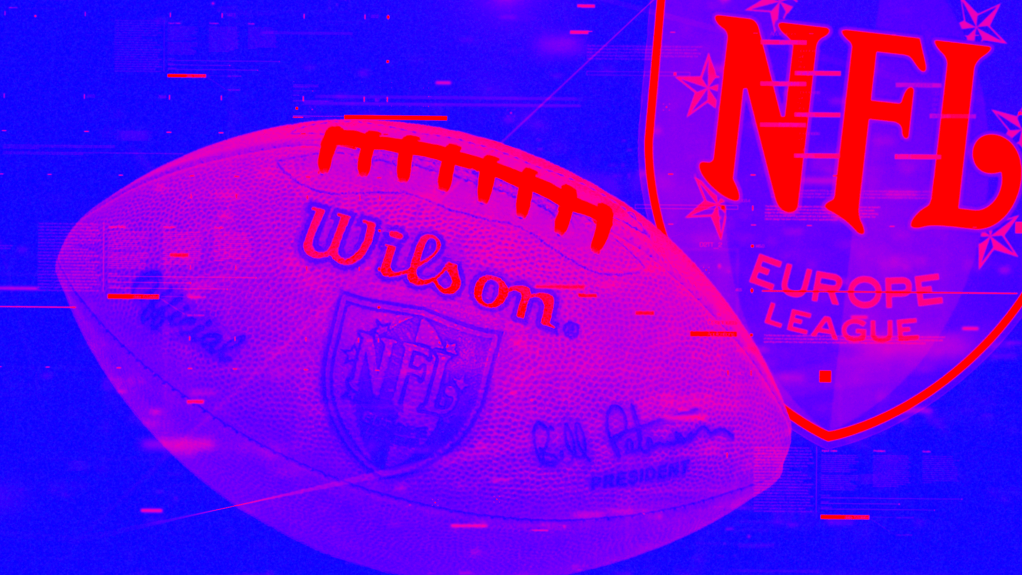
NFL Europe was once the NFL’s bold attempt to grow American football overseas, launching in the early 1990’s with teams across both North America and Europe. But despite early excitement and strong fan support in places like Germany and England, the league struggled to stay afloat. So what exactly led to NFL Europe shutting down in 2007? In today’s video we’ll take a look back at how financial losses, declining interest, and shifting priorities within the NFL ultimately led to its downfall.
World League Beginnings
By the early 1970’s the NFL had seen an explosion in popularity in America due in large part because of the success of the AFL-NFL merger a few years earlier. During this time, the league became interested in growing the game of football in other parts of the world, particularly in Europe. In 1974, the league announced plans to launch a professional American football league in Europe, known as the Intercontinental Football League (IFL). This European league was envisioned as a spring league that would begin play in 1975, and would feature six franchises, including teams in Istanbul, Rome, Munich, West Berlin, Vienna, and Barcelona.
Initially, the league was designed to operate as a satellite league to the NFL, with funding provided by NFL owners. Rosters would be composed primarily of second and third tier players from NFL teams, similar to how soccer clubs loan out players to other teams to gain playing time. The project was the idea of promoter Bob Kap, who already had sold six franchise rights and even secured agreements to loan players from the NFL. Additionally, four other European cities had already been pre-selected for future expansion, with Oakland Raiders owner Al Davis and Dallas Cowboys General Manager Tex Schramm overseeing the development of the league.
Despite the ambitious plans, the IFL never came to fruition. The league’s failure to launch can be traced back to several factors. Europe was considered unprepared for American football, and the league faced potential competition from the World Football League (WFL), which advertised itself as an international football league. However, the WFL only had one team that played outside of continental North America, which was the Hawaiians based out of Honolulu. A few other issues that the IFL faced was players’ strike in the summer of 1974, coupled with the economic recession, which created further complications.
Also, political turmoil in Europe created serious challenges, due to Turkey invading Cyprus, and the American ambassador to Cyprus being assassinated. The U.S. State Department even went so far as to advise NFL Commissioner Pete Rozelle against pursuing the league, and the league’s sponsor Pan American World Airways pulled their support, further crippling the IFL before it even got off the ground. Ultimately, the planned launch was shelved, with Rozelle concluding that the league was “impractical.”
By 1980, however, American football’s popularity in Europe was growing without the NFL’s official presence. Recognizing this newfound interest, the NFL began holding American Bowl games, which were preseason exhibition contests played overseas. The success of these games, particularly in London, renewed Rozelle’s interest in creating a professional European league. In 1989, the NFL officially revived plans to launch an international spring football league.
Originally, the league was to be called the International Football League, but the name was already owned by Donald Trump and Charlie Finley, who had been planning their own league (which never got off the ground). The NFL then pivoted to the name World League of American Football (WLAF), which avoided confusion with the defunct World Football League. The NFL was also careful to use the term “American football” to clarify the sport for European audiences, where “football” typically referred to soccer. With the branding finalized and interest growing internationally, the league quickly moved from the build up phase into making the league a reality.
NFL Europe Rebrand
Talent wise, the WLAF was intended as an international equivalent to the NFL, rather than a minor league. Approved by the NFL in July 1989, it was set to include twelve teams: six in the United States, four in Europe, one in Canada, and one in Mexico (however the planned team in Mexico never came to be). The WLAF secured television deals with ABC and USA Network. One major shakeup happened just before the launch of the league, as Tex Schramm who was leading the project was fired in October 1990 due to disagreements over the league’s vision. The NFL wanted a smaller, controllable league, with close ties to the NFL, which ran counter to Schramm’s vision of a strong, independent league that could eventually be run on it’s own without the NFL.
On November 14, 1990, the WLAF announced it would begin play in 1991 with ten teams, split into three divisions: North America West, North America East, and Europe. The North American West team clubs were The Birmingham Fire, The Sacramento Surge, and San Antonio Riders. The North American East Teams were the Montreal Machines , The New York/New Jersey Nights, Orlando Thunder, and the Raleigh-Durham Skyhawks. The European teams were the Barcelona Dragons, Frankfurt Galaxy, and the London Monarchs. The 50-game schedule ran from March 23 to May 27, 1991, and the WLAF player draft took place from February 14 to February 24, 1991, with a base player salary of $20,000 and incentives up to $100,000. Each NFL team could allocate up to four players to the WLAF, though only the New Orleans Saints and Kansas City Chiefs did so.
The WLAF inaugural season kicked off on March 23, 1991, with games in Frankfurt, Germany, Birmingham, Alabama, and Sacramento, California. By the end of the season, the playoffs featured the three division champions, the London Monarchs, New York/New Jersey Knights, and Birmingham Fire, as well as a wild-card team, the Barcelona Dragons. London and Barcelona both advanced to the first ever WLAF championship game called, “The World Bowl” at Wembley Stadium, where the Monarchs defeated the Dragons in a 21–0 victory.
Despite the initial excitement, the league faced serious financial challenges. The WLAF lost nearly $7 million in its first season, and none of its teams turned a profit. Television ratings on ABC and USA Network were not great, and league chairman Dan Rooney admitted that while costs had been accurately projected, revenue expectations were overestimated. Attendance averaged around 26,000 per game, with European teams drawing higher crowds than the North American clubs. Despite these difficulties, the NFL chose to continue the league in 1992, and rebranded the WLAF to simply, “The World League”. The league also replaced the struggling Raleigh-Durham Skyhawks who had folded after their first season, with the Ohio Glory.
While the league was fairly successful in Europe, with the London Monarchs averaging 45,000 fans per game, the World League remained largely ignored in the United States. Somewhat surprisingly, the NFL decided to suspend World League operations for 1993 and 1994 to retool the league, before returning in 1995 as a six-team, Europe-only league. The original European teams returned, but the Birmingham Fire became the Düsseldorf Rhein Fire , and two new teams, the Amsterdam Admirals and Scottish Claymores, were also added. Furthermore, each team was required to include seven local players on its 40-man roster. To help boost the league’s legitimacy, the Fox TV network became a co-owner and financial backer in exchange for broadcasting rights. A few years later in 1998, the league was renamed once again, this time as “NFL Europe”. Additionally, the London Monarchs became the England Monarchs in an effort to boost attendance, which had dropped below 10,000 per game. Unfortunately, the Monarchs folded the following season and were replaced by the Berlin Thunder.
The Final Years (2000-2007)
The early 2000’s marked a decade into the NFL’s ambitious attempt to expand American football into Europe, with NFL Europe celebrating its 10th season in 2002. Despite the milestone, the league remained far from profitable. That year, NFL Europe announced a three-year partnership with the soccer club FC Barcelona, aiming to promote American football in Europe and boost soccer’s profile in the United States. As part of the collaboration, the Barcelona Dragons were rebranded as the FC Barcelona Dragons. Unfortunately, the partnership fell short of achieving its goals. Attendance steadily declined, dropping below 7,000 per game by 2003, a 50% decrease from the 1997 season, when the team captured the World Bowl title. With diminishing crowds and limited revenue, the Dragons folded after the 2003 season, and were replaced in 2004 by the Cologne Centurions.
The following year, the Scottish Claymores also folded, despite having the largest following of any Scottish sports team outside of the Scottish soccer clubs Celtic and Rangers. With an average attendance of 10,799 fans per game, the league determined that adding another German team could potentially draw over 30,000 fans per game. So naturally, the Claymores were replaced by the Hamburg Sea Devils, leaving the Amsterdam Admirals as the only team outside Germany. This marked a clear shift in the league’s strategy, focusing on Germany as the most receptive market for American football. To further reflect the change in strategy, the league once again changed its name to “NFL Europa” in 2006, ahead of its 15th season, emphasizing its operations in Germany and the Netherlands.
The shift in strategy, and new branding wouldn’t last long however, because on June 29, 2007, less than a week after World Bowl 15, the NFL officially announced that they’d be folding NFL Europa permanently. The league had been losing an estimated $30 million per year, and NFL owners expressed frustration with both its financial performance and its diminishing role in developing NFL-caliber players. The league had actually come close to folding NFL Europa in 2003, when eight of the 32 NFL owners voted against funding it, just one vote short of the nine required to end the league. While popular in Germany, NFL Europa’s diminishing presence throughout Europe conflicted with the NFL’s broader goals of expanding merchandise sales across the continent.
The league’s inability to secure live television contracts in European markets also limited potential revenue, further undermining its sustainability. Critics called NFL Europa an “abysmal failure,” citing the inconsistent quality of play, frequent team name changes, franchise relocations, and the accessibility of regular NFL games in Europe as key factors contributing to its demise. Despite its struggles, NFL Europa did play a significant role in some notable player’s development. The league produced a number of NFL stars, including quarterbacks Kurt Warner, Brad Johnson, Jake Delhomme, and Jon Kitna. Kicker Adam Vinatieri and return specialist Dante Hall, would be eventually named to the NFL’s 2000s All-Decade Team. NFL Europa also provided a platform for testing rules and developing officials and coaching talent.
A new European League (2021-present)
Almost 15 years after NFL Europa folded, a new European football league was announced on November 4, 2020. The new league, called the European League of Football (or ELF), signed an agreement with the NFL to use the branding of former NFL Europe teams. Some of those franchises, including the Barcelona Dragons , Berlin Thunder , Cologne Centurions, Hamburg Sea Devils Frankfurt Galaxy, and Rhein Fire, shared the names and imagery of their NFL Europe predecessors, which kept the old league’s legacy alive. The league launched its first season on June 19, 2021, with the Panthers Wrocław defeating the Cologne Centurions. Throughout the first season, the Frankfurt Galaxy and Hamburg Sea Devils dominated their divisions, and Frankfurt won the inaugural ELF championship, narrowly defeating Hamburg 32–30. After the success of the inaugural season, the league formed a partnership with Brazil’s (bruh-ZILZ) Football Federation to exchange players and officials.
The ELF expanded rapidly, going from 8 teams in 2021, to 12 teams in 2022, to 17 teams in 2023. In 2022, the league added Austrian teams Vienna Vikings and the Raiders Tirol, alongside the Barcelona Dragons, which strengthened the league’s competition. During this time, Frankfurt, Hamburg, and Vienna were the best performing clubs, with the Vienna Vikings winning the 2022 championship against Hamburg. Over the next few seasons, the league saw expansion to Milan, Paris, Prague, Madrid, and Copenhagen, while teams like Barcelona Dragons folded or went on hiatus. The German and Austrian clubs have frequently dominated regular seasons, setting attendance records, including over 32,000 spectators in Hamburg.
In 2025, the ELF faced significant challenges to the future of the league. Eleven teams, including the Berlin Thunder, Rhein Fire, Frankfurt Galaxy, Vienna Vikings, and Paris Musketeers, all left to form a breakaway European Football league called the European Football Alliance or (EFA). The clubs cited concerns over the ELF’s management and financial stability. The ELF has attempted to bring back the breakaway teams in time for the 2026 season, but the agreement was terminated on January 15, 2026 due to ELF’s failure to share key financial transparency documents to breakaway teams.
Simultaneously, four of the eleven breakaway teams split off to create the American Football League Europe or (AFLE), thus creating a third European football league. In February 2026, ELF entered preliminary self-administration proceedings under German insolvency law, with the hope of continuing operations and games during the process. With three American football leagues in Europe all vying for the attention of fans across Europe, it’s very unlikely all three will survive, but it will be interesting to see which league comes out on top.
The NFL in the meantime has continued to expand its presence across the world, since the closure of NFL Europe. The league has now made it an annual event each regular season, hosting games in London and occasional contests in Mexico City and Brazil. As mentioned, Germany has emerged as the fastest-growing international market for the NFL, fueled by both the legacy of former NFL Europa teams and the presence of American military communities. Since 2022, the NFL has played at least one game in either Frankfurt, Berlin, or Munich, with plans for Germany to host more NFL games for the foreseeable future. NFL Europe may have ultimately struggled financially, but it left an enduring impact on player development, fan engagement, and the global reach of American football. Its influence continues to shape the NFL’s international strategy and the future of American football across Europe.
If you’ve enjoyed this article, check out my other post on the rise and fall of the USFL, where I go deeper into how the USFL once looked to challenge the dominance of the NFL in the 1980s and ultimately failed. Please like and subscribe if you haven’t already, and thanks for reading!
 All Sports History
Leave a comment