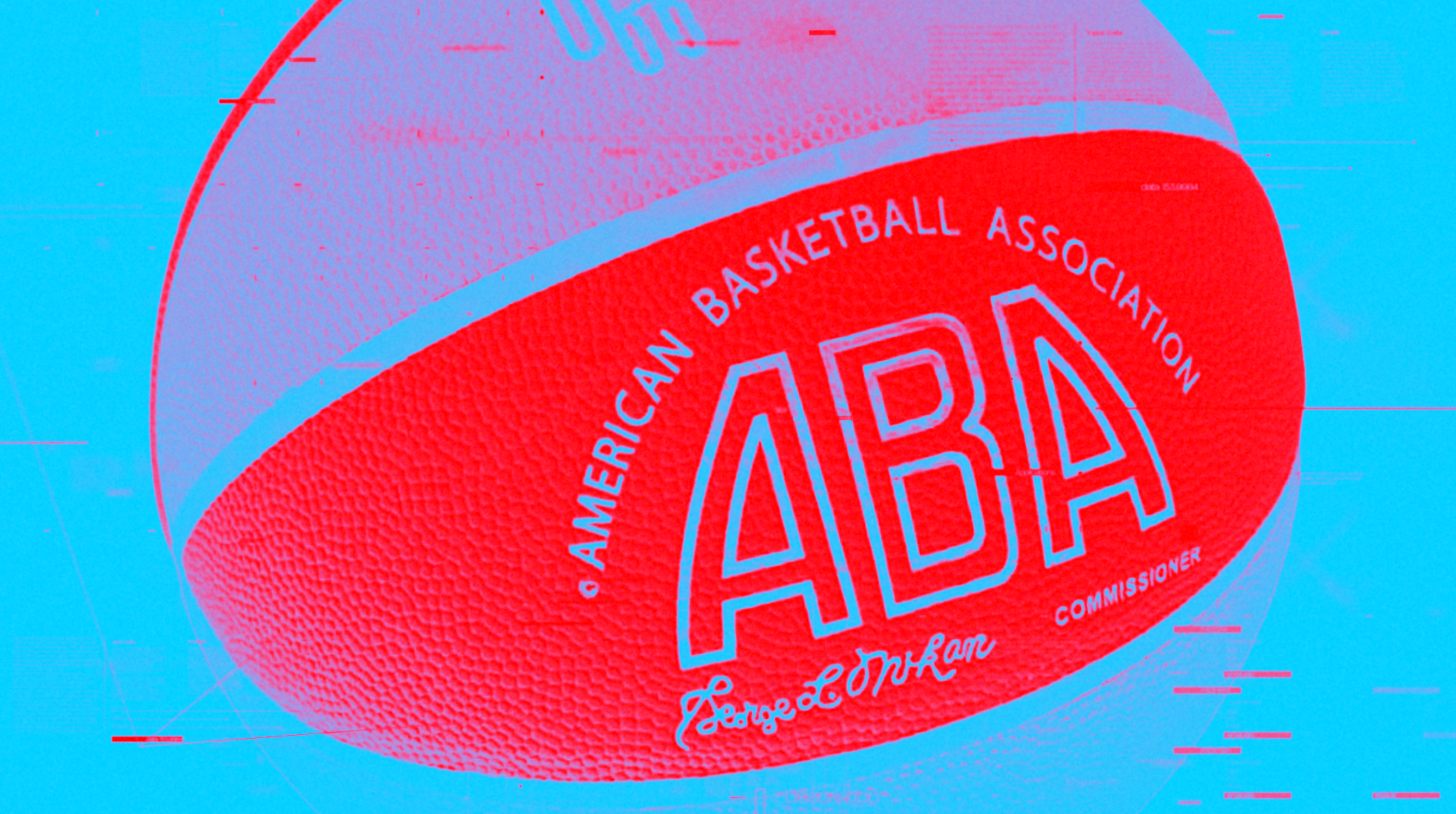
The ABA’s rise began with big ambitions and ended with some of the strangest stories in basketball history. Along the way, the Spirits of St. Louis landed one of the craziest TV deals ever seen in professional sports, the Knicks passed on the chance to draft a future legend in Julius Erving, and the Kentucky Colonels, one of the league’s most successful franchises — shockingly were excluded from the merger with the NBA. In today’s video, we’ll take a look back at the unbelievable rise and fall of the ABA.
Birth of the ABA
The American Basketball Association was created through the efforts of several business groups. Constantine “Connie” Seredin of Professional Sports Management, a company focused on connecting athletes and advertisers, wanted to expand sports marketing and explored the possibility of creating a second professional basketball league. At the time, basketball had no major professional competition to the NBA.
Seredin contacted basketball legend George Mikan about advising a new league, and soon connected with Dennis Murphy, a marketing executive who had also reached out to Mikan. Murphy had previously tried to bring an AFL team to Anaheim, but after the AFL-NFL merger ended that possibility, he shifted his focus toward creating a basketball league.
Murphy consulted former ABL coach Bill Sharman, who helped develop the league’s name and suggested adopting the three-point shot. After gaining Mikan’s support, Murphy envisioned a league that would challenge the NBA in Western markets like Los Angeles and San Francisco. Public relations executive John McShane helped connect Murphy and Seredin and organized a meeting at the Beverly Hills Hilton on December 20, 1966. Originally called the “United Basketball League,” the organization became known as the American Basketball Association and attracted several legitimate investors.
Additional figures soon became involved, including Gary Davidson, an Orange County attorney, and Mark Binstein, who served as acting president. Don Regan, a law school associate of Davidson, also joined the effort. On January 31, 1967, George Mikan expressed interest in becoming the league’s commissioner if the proper terms could be reached.
By the time of the league’s planned press conference, several franchises had been discussed, although not all represented actual ownership groups. Kansas City, Honolulu, and Cleveland were among the cities mentioned but never became ABA teams. Kansas City’s proposed franchise eventually relocated to Denver under different ownership.
Eventually, investors were secured in several cities, including Anaheim, New York, Indiana, Pittsburgh, Houston, Kentucky, Oakland, New Orleans, Dallas, Denver, and Minnesota. A Milwaukee franchise was also considered as part of the original group of teams but never materialized, likely due to the later creation of the NBA’s Milwaukee Bucks.
Mikan officially became the ABA’s commissioner and helped establish some of the league’s most recognizable features, including the red, white, and blue basketball and the use of the three-point shot. At the league’s February 2, 1967 press conference, Mikan stated that the ABA did not intend to take players under contract with the NBA but would welcome anyone available to join. He compared the league’s goal to major companies competing against each other, saying the ABA wanted to become a true competitor.
The ABA was founded during a period when several new sports leagues attempted to challenge established professional leagues. Basketball was considered especially vulnerable because the NBA was still young, had only 12 teams, and had recently faced competition from the failed ABL. ABA owners hoped their league could eventually force the NBA’s hand, and the two leagues could eventually merge.
The American Basketball Association separated itself from the NBA by embracing a faster, more creative style of basketball and introducing several rule changes. The league used a 30-second shot clock before switching to the NBA’s 24-second clock for its final season,
The ABA also experimented with regional franchises, including teams such as the Virginia Squires and Carolina Cougars, which played home games in multiple cities. The league was divided into two divisions, East and West. The Indiana Pacers, Kentucky Colonials, Minnesota Muskies, New Jersey Americans, and Pittsburgh Pipers made up the eastern division. In the west, there was the Anaheim Amigos, Dallas Chaparrals, Denver Rockets, Houston Mavericks, New Orleans Buccaneers, and the Oakland Oaks.
The league began play on October 13, 1967, with the Oakland Oaks defeating the Anaheim Amigos 134–129. Willie Porter scored the first points in ABA history with a tip-in for Oakland.
The ABA had proven it could put an entertaining product on the court, but winning games wasn’t the league’s ultimate objective. Its real mission was far more ambitious, and the battle that followed would change professional basketball forever.
The ABA’s Big Bet
From the beginning, the ABA’s ultimate goal was not necessarily to replace the NBA, but to force a merger. League officials told potential owners that an ABA franchise could be purchased for roughly half the cost of an NBA expansion team, with the belief that a future merger would dramatically increase the value of their investments. Many expected the league to operate for only three to five years before either joining the NBA or folding.
The ABA quickly began competing with the NBA for players by offering larger contracts and using creative financial arrangements. One example was the “Dolgoff Plan,” which was developed by a former basketball player and accountant Ralph Dolgoff in 1962. The plan allowed players to receive money through long-term annuity agreements rather than traditional contracts, essentially deferring the payments until a later date. Players such as Dan Issel and Rick Mount received deals structured this way, frustrating NBA executives. Both leagues monitored each other’s signings, and the battle for talent became one of the defining conflicts between the two leagues.
The ABA’s first major opportunity against the NBA came in 1968, when the league obtained a leaked NBA document containing plans for the 1968 draft, and strategies designed to prevent college stars from signing with the ABA. Although the ABA used similar recruiting tactics, the information provided potential grounds for an antitrust case against the NBA.
However the ABA was far more focused on negotiation with the NBA, rather than trying to beat them at every turn. Unlike previous rival leagues, the ABA found NBA owners relatively open to merger discussions. On June 18, 1970, NBA owners voted 13–4 to pursue a merger, while ABA owners unanimously supported the idea. The proposed agreement would have created a 28-team NBA, combining both leagues under one schedule, a shared draft, and a championship series between the two league champions. Some ABA owners were so confident the merger would happen that the Dallas Chaparrals suggested skipping their own season and preparing to join the NBA.
However, the agreement faced major obstacles, especially from the players. The NBA Players Association filed a lawsuit in 1970, with the president of the Players Association Oscar Robertson wanting to challenge restrictions on player movement, including the reserve clause. The lawsuit argued that the NBA’s system limited player freedom and prevented fair competition.
During that time, the ABA continued building its own identity. After becoming commissioner in 1973, Mike Storen focused on strengthening the league and making it a more equal negotiating partner. The ABA competed aggressively for players, and even attracted top NBA referees such as Earl Strom, John Vanak, Norm Drucker, and Joe Gushue by offering higher salaries and benefits, and proved it could compete on the court.
Exhibition games between ABA and NBA teams in the early 1970s often went in the ABA’s favor, increasing interest in a possible championship series between the leagues. In 1976, the ABA hosted the first-ever slam dunk contest during its final All-Star Game, where Julius Erving won with his famous free throw line dunk, an event that eventually became a permanent part of NBA All-Star Weekend.
The league also introduced innovations that would later become major parts of basketball. The league, desperate to inject the league with upcoming stars, created the Spencer Haywood hardship rule, which helped establish modern NBA eligibility rules by allowing players facing financial or personal difficulties to enter professional basketball before completing four years of college. Haywood had a strong desire to leave college early, in order to financially help his mother who was raising 10 children, and working as a cotton picker for $2 a day.
Before the 1975–76 season, the Denver Nuggets and New York Nets attempted to leave for the NBA, but legal action forced them to remain in the ABA for one final year. The remaining teams battled through financial uncertainty, and the New York Nets ultimately won the 1976 ABA championship behind Julius Erving, defeating the Denver Nuggets.
Despite its creativity and popularity, the ABA’s biggest challenge remained financial stability. While it was close to the end, its final days would produce some of the strangest deals in sports history. Teams would fold, players would be left behind, and one owner would negotiate a deal that would make millions from a team that no longer existed. And even after the ABA was gone, its biggest ideas would live on in the NBA.
I’d just pause real quick to ask, if you’re enjoying this video please hit the like button and don’t forget to subscribe and become a channel member today. The link for the membership is in the description. Also, while the ABA may be gone, its influence can still be seen throughout basketball today. So if a well-funded league existed today that was like the ABA, do you think it could rival the NBA, or would the gap between the two leagues be too large to overcome? Let me know in the comments below! Ok, let’s get back to the video…
The Merger
Although the Senate Antitrust Subcommittee approved a merger in 1972, it ruled that the reserve clause violated antitrust laws, and the legal battle continued. The lawsuit delayed merger talks until it was finally settled in 1976.
With the Oscar Robertson lawsuit finally resolved, serious merger negotiations resumed. Previously, the ABA had claimed that it still had “nine financially solid franchises” even with the Baltimore Claws folding during preseason. But the league’s claim quickly fell apart, as both the San Diego Sails and Utah Stars folded before the end of 1975. The struggling Virginia Squires finished the season with a 15–68 record and poor attendance before folding during the 1976 playoffs.
That left the ABA with only six teams before the league officially merged with the NBA on June 17, 1976. Ultimately, the Denver Nuggets, Indiana Pacers, New York Nets, and San Antonio Spurs survived the merger, while the Kentucky Colonels and Spirits of St. Louis folded during negotiations.
The NBA was skeptical of the Kentucky Colonels joining the merger over fears of it’s small market size, while the Chicago Bulls, who wanted their star player Artis Gilmore, intentionally blocked the Colonels from joining in hopes they could draft Gilmore. As a result, Kentucky was left out of the four teams admitted to the NBA.
On July 17, 1976, owner John Y. Brown agreed to fold the Colonels for $3 million. He used the money to buy the NBA’s Buffalo Braves, hoping to eventually move the team to Louisville and revive the Colonels. But when that plan fell through, Brown instead acquired the Boston Celtics, which he later sold in 1979.
The Spirits of St. Louis owners, Ozzie and Daniel Silna, made an even more remarkable deal. In exchange for allowing the Spirits to fold, they received a 1/7 share of the television revenue from each of the four former ABA teams that joined the NBA—Nets, Nuggets, Pacers, and Spurs—in perpetuity. This meant that any time the NBA negotiated TV contracts, the Silna’s received roughly 2% of any new deal that was made. As NBA television deals became increasingly valuable, the Silnas made millions from a team that no longer existed. For example, by the early 2010’s the Silnas earned close to 15 million dollars per year despite not having owned a team in nearly 40 years.
By 2014, they reached a deal with the NBA to end the perpetual payments in exchange for a $500 million lump sum. To this day the deal is considered one of the greatest sports deals ever made, due to how lucrative it became for the Silnas family.
After the ABA–NBA merger, players from the Kentucky Colonels and Spirits of St. Louis were made available through a special dispersal draft. However, several players went unselected, including Kentucky’s Jimmie Baker, Jimmy Dan Conner, Allen Murphy, and Johnny Neumann, along with St. Louis players Mike D’Antoni, Steve Green, Freddie Lewis, and Barry Parkhill.
Despite not being drafted, several of those players still found their way into the NBA afterward. D’Antoni, Green, and Lewis from the Spirits, along with Murphy and Neumann from the Colonels, all eventually appeared in NBA games. Some also spent time with the former ABA teams that entered the NBA following the merger.
Although the New York Nets entered the NBA merger as the reigning ABA champions, their transition into the NBA quickly became complicated. The New York Knicks demanded a $4.8 million territorial fee, claiming the Nets were entering their market.
The added costs put Nets owner Roy Boe under serious financial pressure, making it difficult for him to honor a promised salary increase for Julius Erving. The Nets explored trading Erving, even offering him to the Knicks in exchange for having the territorial fee waived—but the Knicks rejected the deal.
That opened the door for the Philadelphia 76ers, who purchased Erving’s contract for $3 million, with the total eventually reaching $6 million after all financial obligations were settled.
The deal sent one of the ABA’s biggest stars to the NBA and effectively ended Julius Erving’s time with the league he had helped define.
The ABA Lives On
One of the ABA’s biggest lasting contributions to basketball was the three-point field goal. The ABA had adopted the shot during its existence, but the NBA initially dismissed the idea. Eventually, however, the NBA introduced the three-point line during the 1979–80 season.
San Antonio Spurs owner Angelo Drossos recalled that many NBA figures opposed the shot during the merger discussions. He specifically mentioned Boston Celtics president Red Auerbach, who strongly disliked the three-pointer and opposed its adoption. However, Drossos noted that attitudes changed later, especially after Auerbach drafted Larry Bird and the three-point contest became one of the NBA All-Star Weekend’s most popular events.
The ABA’s collapse also created problems for former players beyond their basketball careers. When the league dissolved, its pension fund disappeared, leaving many former ABA players without the retirement benefits they had expected. In 2014, a class action lawsuit was filed on behalf of 204 former ABA players, claiming that the NBA failed to properly handle retirement obligations when it absorbed the league.
The lawsuit eventually settled for $800,000, which amounted to less than $4,000 per player. However, many former ABA players, organized under the group Dropping Dimes, continued pushing for what they believed was a fairer share of NBA profits.
In 1997, the ABA celebrated its 30th anniversary by creating an All-Time Team recognizing the league’s greatest players. The list honored 30 players who had made the biggest impact during the ABA’s ten years and nine full seasons of operation. Selection was based not only on statistics and performance but also leadership, sportsmanship, and contributions to the league’s growth.
The team was announced in Indianapolis during an ABA reunion on August 23, 1997. A panel of 50 voters selected the players through unranked voting. The panel included members of the media who covered ABA games, former referees, former owners, league executives, fans, and statisticians. Former players were not allowed to vote.
Five players selected to the ABA All-Time Team—Rick Barry, Billy Cunningham, Julius Erving, George Gervin, and Moses Malone—had also previously been named among the NBA’s 50 Greatest Players.
In 1999, a new league called ABA 2000 was created using the old ABA name and a similar red, white, and blue basketball design. However, unlike the original ABA, the new league does not feature players at an NBA-caliber level, and is considered semi-professional, while also not operating in major arenas or receiving national television coverage like the original league had.
The league is primarily based in the United States, though it has previously featured international teams from Canada, China, and Mexico, as well as a traveling team from Japan. With low requirements for franchise ownership, hundreds of ABA teams have folded or moved to other leagues. The league licenses the ABA name and trademarks from the NBA, which absorbed the original ABA during the 1976 merger.
The American Basketball Association may have lasted only nine seasons, but its impact on basketball is still felt today. The league introduced some of the sport’s biggest innovations, helped launch the careers of some of basketball’s greatest players, and proved that a rival league could force the NBA to change. But behind the flashy style and unforgettable moments was a story of financial struggles, missed opportunities, and teams that were left behind. The ABA ultimately failed as a business, but its ideas, players, and legacy became a permanent part of the NBA. In many ways, the league that couldn’t survive helped shape the future of basketball.
If you enjoyed this post, be sure to check out my article on the World Hockey Association, founded by the same man who helped start the ABA, Gary Davidson. I explore how the WHA tried to challenge the NHL by luring major NHL Stars away with millions of dollars, but ultimately collapsed after years of competition. Please like and subscribe if you haven’t already, and thanks for reading!

Leave a Reply