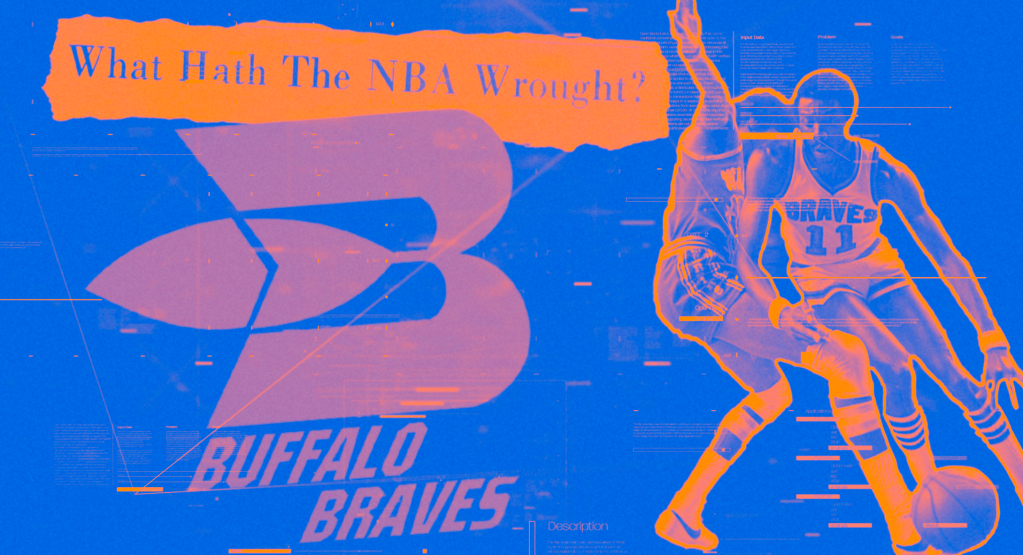
In the early 1970’s, the Buffalo Braves were a part of an exciting time in Buffalo’s growing sports scene. So what exactly happened to the Braves that resulted in the team packing up and moving to the west coast after only eight seasons? In today’s video we’ll take a look back to how the Braves constant fight with their own home arena over scheduling led to the ownership allegedly sabotaging their own roster to force a relocation.
The NBA Expands
By the late 1960’s, the NBA had firmly established itself as the premier basketball league in the world. But, a rival league the American Basketball Association had proved to be a bigger threat than the NBA had thought, creating competition for talented players and driving up costs. Because of this NBA owners were looking to get a quick infusion of cash, and what better way than to expand the league and collect the expansion fees? So in November of 1969, the NBA approved of a four team expansion, selecting Cleveland, Portland, Houston, and Buffalo as expansion sites. Unfortunately for Houston, their ownership group dropped out when they couldn’t come up with the expansion fee and so the NBA was left with an awkward three team expansion going from 14 teams to 17. Houston would eventually get an NBA team though, when the San Diego Rockets moved there in 1971, becoming the Houston Rockets. The three new clubs were the Cleveland Cavaliers, the Portland Trail Blazers, and the Buffalo Braves. For the first time, the NBA would be separated into two conferences, East and West, with each conference containing two divisions. This was an exciting time for sports in Buffalo, because the city not only got an NBA team, but the city was also about to get an NHL team for the first time in the Buffalo Sabers. And in football, the Buffalo Bills had moved from the AFL to the newly merged NFL playing in the American Football Conference. Initially, the Braves franchise was awarded to an investment firm from New York City, called Neuberger Loeb. However, the league had to step in and take over the team even before the Braves ever played a game after Neuberger Loeb found themselves in legal trouble due to a string of missteps in their investment business. Not long after, entrepreneur Paul Snyder bought the team for 4 million dollars after selling his stake in his former business “Freezer Queen”. With the new ownership in place, the Braves were set to start play for the 1970-71 season.
Prior to the team settling on the name “Braves” as the nickname for the franchise, the team held a fan contest to name the team. The most popular choice was “Frontiersman” netting a whopping 74 votes. In an interesting move, the team allegedly decided to flat out ignore the fan vote and go with the name “Braves” instead, insisting that the name was a better fit for the city and the players representing the team. The club said that the Braves name was inspired by the Seneca Nation of New York, a federally recognized Native American tribe based in Western New York. For the team colors, during the first season the Braves wore blue, red, gold, and white on their jerseys. But in their second season, the team rebranded to black and orange, while also introducing the feathered “B” logo for the first time. During the team’s fourth season of existence, they decided to rebrand once again by dropping the black and orange look in favor of a columbia blue, and white jersey, with black accents. This would be their primary look for the rest of the Brave’s existence in Buffalo. The team played at the Buffalo Memorial Auditorium, or more simply known as “The Aud”. It first opened its doors in 1940, and had been home to several teams including the Buffalo Bisons hockey team of the American Hockey League, (and yes they were owned by the same people who also owned the local Pepsi bottling plant) SYNERGY!. That wasn’t the only Buffalo Bisons team to play there either, a basketball team of the same name played in the National Basketball League. However, the team only lasted in Buffalo for 38 days before moving to Moline, Illinois. Eventually, after joining the NBA and several relocations later, that team would go on to become the Atlanta Hawks in 1968. One issue that complicated things almost immediately for the Braves was the scheduling issues they faced with the other tenants of the Aud. As previously mentioned the Buffalo Sabres were just starting out like the Braves, and played their home games at the Aud, while the college basketball team Canisius Golden Griffins also played there. Unfortunately for the Braves, they were third on the preferred scheduling list meaning that they were giving less than favorable dates for games. This would become a major sticking point in the Braves struggles to establish themselves as a successful franchise in Buffalo.
The Game Changer
The first ever game for the Braves took place on October 14, 1970 against the other expansion club the Cleveland Cavaliers where they won 107-92. Under head coach and hall of fame player Dolph Schayes, Buffalo went on to have an unremarkable first season falling to a 22-60 win/loss record. Unfortunately for Coach Schayes, he was fired just one game into his second season and was replaced by hometown hero Johnny McCarthy for the remainder of the season. The Braves then hired future hall of fame coach Jack Ramsay, who’d coach the team for the next four seasons. Prior to the 1972-73 season, the Braves made a franchise altering pick in the NBA Draft when they selected Bob McAdoo out of North Carolina as the second selection. McAdoo would have an immediate impact on the team, winning the Rookie of the Year award in 1973 and was named to the NBA All-Rookie First team. McAdoo would also go on to win the league’s scoring title three seasons in a row from 1974 to 1976. In McAdoo’s second season with the team, the Braves clinched a playoff berth for the first time in franchise history. Buffalo faced off against Boston in the first round, and were defeated in 6 games by the eventual champion Celtics. The following season, Bob McAdoo was crowned as the league’s most valuable player. McAdoo averaged 34.5 points per game, shot over 80 percent from the free throw line, and had just over 2 blocks and 14 rebounds per game. With the help of Randy Smith, and Jim McMillian, McAdoo led the Braves once again into the playoffs in 1975. That postseason Buffalo faced Washington in the Conference Semifinals, losing in a heartbreaking 7 game series to the Bullets. The next year, the Braves rebounded once again and made the playoffs for the third straight year. In the opening round Buffalo and Philadelphia squared off in a short 3 game series. The Braves finally prevailed after narrowly defeating the 76ers 124-123 in the third game to clinch their first ever playoff series win. In the Conference semifinals, they once again met the Boston Celtics and once again were defeated by the Celtics in six games. This would mark the last time the Braves would make an appearance in the playoffs while in Buffalo, and it would take another 16 years before the franchise once again clinched a playoff spot.
With the team experiencing some success on the court, reaching the playoffs in consecutive years, both in-game audience numbers and TV ratings continued to be decent. The Braves drew close to the league average in attendance, and more than doubled their crowd numbers from their first season when they only drew less than 5,000 people per game. Even with the team seemingly moving in the right direction both on and off the court, the league was not happy with the situation surrounding their home arena. The Braves were routinely the third wheel when it came to scheduling for the Aud. This was due to the arena’s owners, the city of Buffalo, favoring the Sabres and the college basketball team the Canisius Golden Griffins because they annually drew bigger crowds than did the Braves. The scheduling conflicts were so bad, that the Braves were forced to play 16 home games in Toronto between 1971 and 1976. With the NBA and team hoping to make the best of the situation by using the Toronto home games as a way to gain exposure in an interactional market that didn’t have NBA basketball at the time. Making matters worse, the league had to wait until the Sabres and Golden Griffins made their schedules so that the NBA could then negotiate TV contracts while also finalizing their schedule. Understandably this made the league incredibly frustrated, and around the time of the Braves’ first year, the NBA set a five year deadline with the club’s owner Paul Snyder to find a solution to the issue. The scheduling issues also caused personal tensions between Snyder and the owners of the Sabres, and also raised tensions with Canisius’ school president, Father James Demske. In fact, Snyder tried to offer Demske $125,000 per game if he gave up some of the valuable Saturday night games that Canisus had on their schedule. Demske declined to accept, because he saw the Braves as competition and feared their success may lead to a decline in attendance for Golden Griffin games. The college basketball team had long been very popular in the area. This was especially due to the team’s successful run during the 1950’s when they punched their ticket to what would be later known as the NCAA’s March Madness tournament four times, and advanced as far as the Elite Eight twice (once in 1955, and in 1956). So understandably Father Demske felt threatened by the Braves and the NBA’s potential to overshadow the school, while also potentially diminishing the school’s long standing rivalries with Niagara University and St. Bonaventure University.
Ownership Changes
By the end of the 1976 season, Snyder was at the end of the five year deadline imposed by the league to get the area situation figured out. He really only had two real options, number #1 he could move and relocate the team to another city, or number #2, sell the team and make it someone else’s problem. A potential third option of building a new arena in Buffalo was never really considered because of how cash strapped the team was at the time, plus Snyder wasn’t very confident in the team’s ability to survive in Buffalo after he quoted saying he didn’t feel the area could support three major sports franchises. In June of 1976, it was reported that Snyder had a handshake deal to move the Braves to Miami to play at the recently built 15,000 seat Hollywood Sportatorium. Basically, Snyder would give Irving Cowan, president of the Diplomat Hotel, the option of buying 100% stock of the team for 6.1 million dollars. But upon hearing the news, the city of Buffalo countered with a $10 million dollar lawsuit seeking damages in the likelihood of the sale. About a month later, the deal fell through and Snyder and the city of Buffalo signed a 15-year lease with the Aud with the stipulation that the lease could be torn up if the team didn’t sell a minimum of 5,000 season tickets in any given year. Understandably for Paul Snyder, the Braves arena dilemma proved to be a major headache and more than he bargained for, so he turned his attention to selling the team. Before the 1976-77 season got underway, Snyder reached a deal with Kentucky Fried Chicken investor, and former Kentucky Colonels owner John Y. Brown Jr., to sell 50 percent of the team while agreeing to later sell the remaining half during that season. Brown then turned around and sold half of the team’s stake to businessman and horse-racing owner Harry T. Mangurian Jr.
As all of the ownership changes were going on, head coach Jack Ramsay also parted ways with the Braves before the 1976-77 season. There is some debate as to whether Paul Synder fired Ramsay, or if Ramsay decided to leave on his own after seeing where the direction of the team was heading. In either case, Ramsay left the Braves with his contract not being renewed. And it was a good thing he did, because he then took the head coaching job with the Portland Trail Blazers and ended up winning the championship with the Trail Blazers that season giving them the first and thus far only title in the team’s history. And speaking of the Trail Blazers, prior to that season the ABA and the NBA agreed to merge leagues, and in the subsequent dispersal draft Portland chose future hall of famer Moses Malone first. Portland then immediately traded Malone to the Buffalo Braves in exchange for $350,000 and the first pick in the NBA regular draft. Malone’s tenure in Buffalo would be short lived however, as he only played two games, with a total of six minutes of playing time before he was traded to Houston. This marked the unofficial beginning of the dismantling of the Braves roster by the team’s new owners. Halfway through the season, Braves star and former MVP Bob McAdoo was traded along with Tom McMillen to the New York Knicks. The team would go on to lose 52 games during the 1976-77 season, and 55 games the following season, making them one of the worst teams in the league at that time. The creation of a poor team, and selling off players was all part of a not so thinly veiled attempt to drive people away from attending Braves games. This was due to the previously mentioned stipulation in the lease agreement with the Aud, that if season tickets fell below 5,000 in any given season, the lease could be terminated, and that’s exactly what the new ownership wanted. It was around this time that the owner of the Boston Celtics, Irv Levin met with Braves owner John Y. Brown to discuss the potential of an unusual deal between the two teams. Levin, who had a background as a producer in the film industry, had for a long time wanted to move back to Southern California but knew there was no way the NBA would ever allow him to relocate the Celtics. David Stern, who was the then NBA General Council, came up with the idea for the two ownership groups to swap teams. John Y. Brown and Mangurian would get the Celtics, while Levin would get the Braves, and the NBA’s blessing to start the process of relocation. Stern got the idea for the team swap after watching the owners of the Baltimore Colts and Los Angeles Rams swap teams in 1972.
The Move
After the 1978 season ended, that summer on July 7, the owners voted 21-1 to allow the Braves to move from Buffalo to San Diego. As part of the team swap, many of the players who played on the Celtics were traded to the Braves, and vice versa. The team would begin play the following season at their new home the San Diego Sports Arena, where the San Diego Rockets used to play before they moved to Houston. The club decided to hold a fan contest to rename the team, and the name “Clippers” was selected in honor of the large sailing ships that often sailed through San Diego’s harbor. The club’s new city and name wouldn’t help the team’s play on the floor very much, as the Clippers finished near the bottom of their division every year throughout the remainder of the 1970’s and 1980’s. In 1981, Irv Levin sold the Clippers for $13.5 million dollars to lawyer and real estate mogul Donald Sterling, which would later be adjusted to 12.5 million. Sterling would continue on as the Clippers owner for the next 33 years, until he was given the distinction of a lifetime ban from the NBA after racist remarks he made surfaced in 2014. Jumping back to the summer of 1982, Sterling tried to force a relocation of the Clippers to Los Angeles, which triggered an investigation into Sterling’s business practices as owner of the team. Later, an NBA committee found that he was late paying his players and owed money to creditors. The committee actually recommended that Sterling’s ownership be revoked, but David Stern once again stepped in and convinced Sterling to hand over team operations to the Lakers former legal counsel Alan Rothenberg, while Sterling could continue on as the primary owner.
Inspired by Al Davis moving the Raiders from Oakland to Los Angeles in defiance of the NFL, Sterling, (seen here exclaiming that nothing could possibly go wrong from this point forward) decided to attempt moving the Clippers to LA again in 1984. The league hit back at Sterling, fining him $25 million dollars and demanding the Clippers be returned to San Diego or they’d dissolve the franchise. Sterling responded by suing the NBA for $100 million dollars in an antitrust lawsuit. Thanks to a court ruling against the NFL, allowing Al Davis to officially move his team to LA, it became clear that the NBA would fall to a similar fate in the case against Sterling. The now newly elected NBA commissioner David Stern, realizing that this was a problem that he himself helped create, then opened negotiations with Sterling. The league agreed to reduce the fine to $6 million while also allowing the team to remain in Los Angeles, but only if Sterling dropped the antitrust lawsuit (which he ultimately did). Even with the Clippers firmly in place in Los Angeles, the league still wanted to have a presence in the Buffalo area. Throughout the late 1980’s and 1990’s the NBA held regular exhibition games at the Aud, featuring some of the league’s most popular teams like the Chicago Bulls, Los Angeles Lakers, and Boston Celtics. Basketball has always had a strong history in Buffalo and has remained very popular for what’s today considered a “Hockey Town”. While it’s unlikely that the NBA would expand to Buffalo anytime soon, with other cities like Seattle and Las Vegas being the obvious front runners, there’s always the possibility that the league could some day return to the city. Meanwhile, the LA Clippers continue to carry the legacy of the Buffalo Braves. While the memories of their time in Buffalo and San Diego may have faded over the years, the team’s journey from Western New York to California remains an important part of their history, serving as a testament to the enduring resilience of the franchise.
So what did you think of the Braves moving to San Diego and becoming the Clippers? Do you think that the NBA will ever return to Buffalo as an expansion club or as a relocated team? Let me know in the comments below!


 All Sports History
Leave a comment