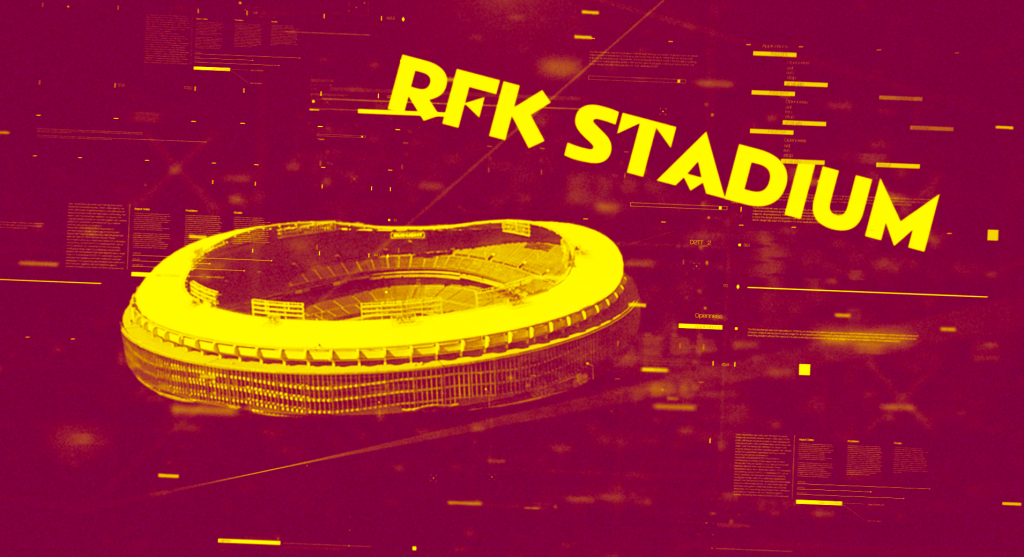
RFK Stadium, short for Robert F. Kennedy Stadium, stands as a historic symbol of sports and entertainment in the United States. Located in Washington, D.C., the stadium was named in honor of Robert F. Kennedy, the late U.S. Senator and Attorney General, and was opened in 1961. Over its decades-long existence, RFK Stadium has hosted a myriad of significant events, from iconic sports moments to cultural gatherings that have left an indelible mark on American history.
Planning & Development
The idea for a new stadium (that would eventually become RFK stadium) was born out of the need for modern sports facilities in the city, as well as the desire to create a multipurpose venue that could accommodate various events. The stadium was designed to replace Griffith Stadium, the former home of the Washington Senators baseball team, which had become outdated and was no longer suitable for modern sporting events.
RFK Stadium’s design was a collaborative effort involving architects and engineers who aimed to create a state-of-the-art facility. The stadium’s circular design was innovative for its time, allowing unobstructed views for spectators from various angles. Its dual-deck seating configuration and open-air concourses were novel features that contributed to the vibrant atmosphere during events. Construction began in 1959, and the stadium was officially opened on October 1, 1961, with a football game between the Washington Redskins and the Dallas Cowboys.
The development of RFK Stadium not only brought a new home for sports to the city but also contributed to the urban revitalization of the area. The stadium’s location near the Anacostia River and its proximity to the city center made it accessible to both local residents and visitors. It quickly became a hub for sports and entertainment, hosting not only baseball and football games but also concerts, soccer matches, and political events. RFK Stadium’s impact on the city’s culture and identity remains significant, as it continues to evoke nostalgia and memories of the countless events that took place within its iconic circular structure.
Renaming The Stadium
Originally, the stadium opened up with the name “District of Columbia Stadium” or “DC Stadium” for short. However, the stadium was later renamed to “RFK Stadium” in 1969, which was made in honor of Robert F. Kennedy, the former U.S. Senator from New York and Attorney General, who had tragically been assassinated in 1968. RFK was widely admired for his commitment to social justice and civil rights, and his untimely death had a profound impact on the nation. The renaming of the stadium was a tribute to his legacy and the ideals he stood for.
The choice to rename the stadium RFK was a reflection of the city’s desire to pay homage to a figure who had left an indelible mark on American politics and society. RFK Stadium became a symbolic space where sports and civic engagement intersected. Beyond serving as a venue for athletic events, the stadium embodied the spirit of unity, progress, and change that Kennedy represented. The renaming not only honored his memory but also carried forward his legacy by creating a place where people could come together, celebrate, and reflect.
The renaming to RFK Stadium added an extra layer of significance to the venue and created a lasting connection between sports and the broader social fabric. It transformed the stadium into a living memorial, reminding visitors and fans of the ideals and values that Robert F. Kennedy championed. The name change not only honored a visionary leader but also transformed the stadium into a place of remembrance, inspiration, and shared experiences, making RFK Stadium a name that would resonate with generations to come.
Washington Redskins
The Washington Redskins’ tenure at RFK Stadium marked an era of triumphs, traditions, and an enduring connection with their passionate fan base. From 1961 to 1996, the stadium became a hallowed ground for football enthusiasts, witnessing some of the team’s most iconic moments and creating an unmatched atmosphere that fans still fondly remember. RFK Stadium’s distinct circular design and vibrant energy provided the perfect backdrop for the Redskins to forge their legacy.
During their time at RFK Stadium, the Redskins achieved remarkable success, including three Super Bowl victories in 1982, 1987, and 1991. Led by legendary coach Joe Gibbs and boasting a roster of talented players, the team solidified its status as a football powerhouse. The stadium’s raucous environment, often referred to as the “RFK Riot,” was a key factor in creating a home-field advantage for the Redskins. The enthusiasm of the fans and the electric atmosphere within the stadium fueled the team’s competitive spirit and contributed to their storied successes.
The Washington Redskins’ departure from RFK Stadium in 1997 marked a significant transition in the team’s history and was driven by a combination of factors that included the desire for a modern stadium, increased revenue opportunities, and the evolving standards of sports facilities. As the NFL moved toward larger, more technologically advanced stadiums, RFK Stadium’s aging infrastructure and limited amenities began to fall short of the expectations of both fans and the league.
One of the key factors that contributed to the Redskins’ departure from RFK Stadium was the team’s need for a more contemporary venue that could provide modern amenities and an enhanced game-day experience for fans. While RFK Stadium had a storied history, its limitations in terms of seating capacity, technology, and luxury suites became increasingly evident as the NFL landscape evolved. The construction of new, state-of-the-art stadiums across the league raised the bar for facilities, making it imperative for the Redskins to explore opportunities that would offer a more modern and fan-friendly environment.
Furthermore, the move was also financially motivated. Modern stadiums offered a range of revenue streams beyond ticket sales, including luxury suites, premium seating, and sponsorships, all of which could significantly contribute to the team’s financial stability and competitiveness. The decision to leave RFK Stadium was, therefore, a strategic one, aimed at positioning the team for long-term success in a rapidly evolving sports industry. While the departure marked the end of an era at RFK Stadium, it also paved the way for the team to transition into a new chapter and continue building its legacy in a more contemporary stadium environment.
Washington Senators & Nationals
The Washington Senators’ stint at RFK Stadium holds a special place in the hearts of baseball enthusiasts and represents a significant era in the city’s sporting history. From 1961 to 1971, the Senators called RFK Stadium their home, creating memorable moments and fostering a dedicated fan base. The stadium’s circular design and open-air concourses provided an inviting backdrop for baseball, allowing fans to connect with the game in an engaging and communal environment.
The departure of the Washington Senators from RFK Stadium in 1971 marked the end of an era and was influenced by a combination of factors that ultimately led to the team’s relocation. One of the primary drivers was the Senators’ struggles on the field, which translated into dwindling attendance and a lack of competitive success. As the team’s performance declined over the years, fans’ enthusiasm waned, resulting in lower ticket sales and a challenging financial situation.
Additionally, the stadium itself faced challenges related to its aging infrastructure and limited amenities. RFK Stadium, which had been a cherished home for the Senators and other sporting events, began to show signs of wear and was unable to keep up with the changing demands of modern sports facilities. The absence of modern amenities and the emergence of newer, more technologically advanced stadiums in other cities made it difficult for RFK Stadium to remain a viable and attractive venue for both fans and the team.
It would take another 34 years before baseball would return to the D.C. area, when the Montreal Expos relocated to Washington D.C. in 2005. For the next two years, RFK Stadium became the backdrop for the Nationals’ inaugural seasons in Washington, D.C. As the Nationals’ temporary home while Nationals Park was being constructed, RFK Stadium played a pivotal role in rekindling the city’s baseball spirit.
The Nationals’ time at RFK Stadium was characterized not only by the thrill of seeing a new team take the field but also by the remarkable journey of the franchise itself. The team’s early seasons were marked by the emergence of talented players and the growth of a passionate fan base that embraced the Nationals as their own. The stadium’s intimate atmosphere and the enthusiasm of the fans created an electric ambiance during games, establishing RFK as a place of hope and excitement for baseball aficionados in the city.
Beyond the games themselves, RFK Stadium’s role in re-establishing baseball in Washington, D.C., was a symbolic one. It was a testament to the enduring allure of the sport and its power to bring communities together. The Nationals’ presence at RFK Stadium sparked a resurgence of baseball fever in the city, cultivating a renewed sense of pride and identity for Washingtonians. While the Nationals eventually moved to their permanent home at Nationals Park, the memories forged at RFK Stadium remain a cherished part of the team’s history and the city’s sports heritage.
Demolition & Legacy
The demolition of RFK Stadium in Washington, D.C., marked the end of an era that spanned over five decades, filled with sports triumphs, cultural milestones, and cherished memories. The decision to dismantle the iconic stadium was made due to a combination of factors, including its aging infrastructure, the desire for modern facilities, and the changing landscape of sports venues. The demolition process, which began in 2020, marked a bittersweet moment for both sports fans and the city, as they bid farewell to a venue that had played a pivotal role in Washington, D.C.’s sports and cultural history.
As the stadium was gradually dismantled, it served as a poignant reminder of the numerous events that had taken place within its circular confines. From baseball games to concerts, political rallies to memorable sporting moments, RFK Stadium had hosted a plethora of significant events that left an indelible mark on the city’s identity. The demolition process also sparked reflections on the enduring legacy of the stadium, with many remembering the camaraderie, excitement, and shared experiences that took place there.
While the physical structure of RFK Stadium may have been torn down, its impact on Washington, D.C., continues to resonate. The memories created within its walls, the cheers of fans, and the vibrant energy of the stadium live on in the hearts of those who experienced its magic firsthand. The demolition of RFK Stadium is a poignant reminder of the passage of time and the evolution of urban landscapes, but it also serves as a testament to the enduring power of sports and community in shaping the spirit of a city.
 All Sports History
Leave a comment