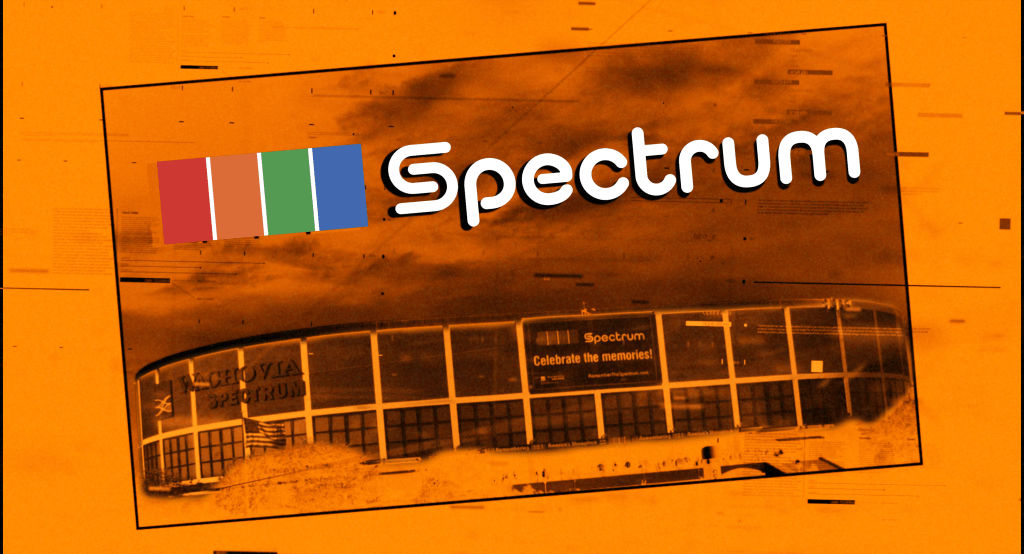
Mathieu Plourde, CC BY 2.0, via Wikimedia Commons
The Spectrum Arena in Philadelphia, once a bustling hub of entertainment and sports, holds a special place in the hearts of Philadelphians. Located at the corner of Broad Street and Pattison Avenue, this iconic venue served as the home for several sports teams and hosted numerous unforgettable events. Let’s explore the legacy and significance of the Spectrum Arena.
Opening its doors in 1967, the Spectrum Arena was an architectural marvel of its time. Its distinctive circular design and reddish-orange, and white exterior made it a recognizable landmark in the city of Philadelphia. The Spectrum quickly became the home of the Philadelphia Flyers, the city’s beloved hockey team. The raucous atmosphere inside the arena during Flyers games earned it the reputation of one of the loudest and most intimidating venues in the NHL. Basketball fans also flocked to the Spectrum to witness the Philadelphia 76ers in action. The team enjoyed several successful seasons at the arena, including their championship-winning years in 1983 and 1984.
Beyond hockey and basketball, the Spectrum hosted a wide range of events, including concerts, circuses, and professional wrestling matches. Legendary musicians like Elvis Presley, The Rolling Stones, and Bruce Springsteen graced its stage, leaving lasting memories for attendees. In 1976, the Spectrum Arena nicknamed, “America’s Showplace” served as a prominent venue during the Bicentennial celebrations. That same year, It hosted the NBA All-Star Game and brought together basketball stars from across the league. One of the most iconic moments in the Spectrum’s history took place in 1967, when heavyweight boxing legend Joe Frazier fought Tony Dolye in the first ever sporting event to take place at the arena.
The Spectrum Arena played a pivotal role as part of Philadelphia’s sports complex, which encompassed a cluster of sports venues in the city. Situated in South Philadelphia, the Spectrum was in close proximity to its neighboring stadiums, including Veterans Stadium (former home of the Philadelphia Eagles and Phillies) and the current Wells Fargo Center (home to the Flyers and 76ers). This concentration of sporting arenas created a vibrant sports district that drew fans from all over Philadelphia and beyond. The proximity of the Spectrum to the other sports venues allowed for easy access and convenience for fans attending games and events. The complex became a hub of activity on game days, with a bustling atmosphere that showcased the city’s passion for sports. Fans could easily transition between different sporting events, immersing themselves in the excitement of multiple games in a single day.
By the 1990’s and 2000’s the arena had begun to show its age. The Spectrum lacked much of what modern arenas at the time had, which was luxury suites, overall larger capacity, and a lack of obstructed sightlines. The Spectrum’s eventual replacement area, which became what is today known as the “Wells Fargo Center”, was first proposed in the early 1990’s and broke ground on construction in 1994. The goal was to create a world-class facility that would not only serve as a home for the Flyers and 76ers but also attract major events and concerts to Philadelphia. The design incorporated cutting-edge features, including advanced lighting and sound systems, comfortable seating, and spacious concourses to enhance the overall fan experience. The construction phase of the Wells Fargo Center was a massive undertaking, requiring careful coordination and execution. The brand new arena opened in 1996, with both the 76ers and Flyers moving from the Spectrum to their new home at the CoreStates Center, which would later be called the Wells Fargo Center.
The Spectrum would continue on as a venue for minor league sports teams for the next decade and a half. By the late 2000’s, a proposed entertainment district called Philly Live! emerged as a transformative project that would replace the iconic Spectrum Arena in Philadelphia, signifying a shift in the city’s entertainment landscape. The plan became official on July 14 2008, when Comcast chairman Ed Snider said, “This has been one of the hardest decisions I’ve ever had to make…The Spectrum is my baby. It’s one of the greatest things that has ever happened to me.” The decision to replace the Spectrum was driven by the desire to create a modern and dynamic destination that would cater to the evolving tastes and preferences of Philadelphia residents and visitors. Philly Live! stepped into the shoes of the Spectrum, embracing the opportunity to revitalize the area and provide a fresh entertainment experience.
The transition from the Spectrum to Philly Live! represented a departure from the traditional arena concept and embraced a more multifaceted approach. While the Spectrum had primarily focused on sports and concerts, Philly Live! expanded its scope to encompass dining, nightlife, and a broader range of entertainment options. The transformation aimed to create a vibrant and inclusive destination that would cater to a diverse audience, accommodating various interests and creating new opportunities for socializing and gathering.
The Spectrum’s impact extended beyond sports and entertainment. It played a crucial role in fostering community spirit and unity, as Philadelphians of all backgrounds came together to support their teams and enjoy shared experiences. In 2009, the Spectrum Arena held its final event, a concert by Pearl Jam. The closure marked the end of an era, leaving a void in the city’s sports and entertainment scene. The demolition of the Spectrum Arena in Philadelphia marked the end of an era and evoked mixed emotions among the city’s residents. After standing for over four decades as a beloved sports and entertainment venue, the decision to tear down the Spectrum was met with a sense of nostalgia and reflection. The demolition took place in between 2010 and 2011, clearing the way for future development but leaving a void in Philadelphia’s sports landscape. The reason for the extended demolition timeframe being so that they could protect the other sports venues situated in the same complex from dust and debris.
While the original Spectrum Arena was gone by 2011, its legacy lives on. A mural depicting the iconic arena now adorns the exterior of the Xfinity (Philly) Live! entertainment complex, paying homage to the building that once stood in its place. Today, as Philadelphia continues to thrive and evolve, the Spectrum Arena remains a cherished part of the city’s history. Its impact on the sports, entertainment, and cultural fabric of Philadelphia is a testament to the enduring spirit of the city and its passionate residents.
 All Sports History
Leave a comment