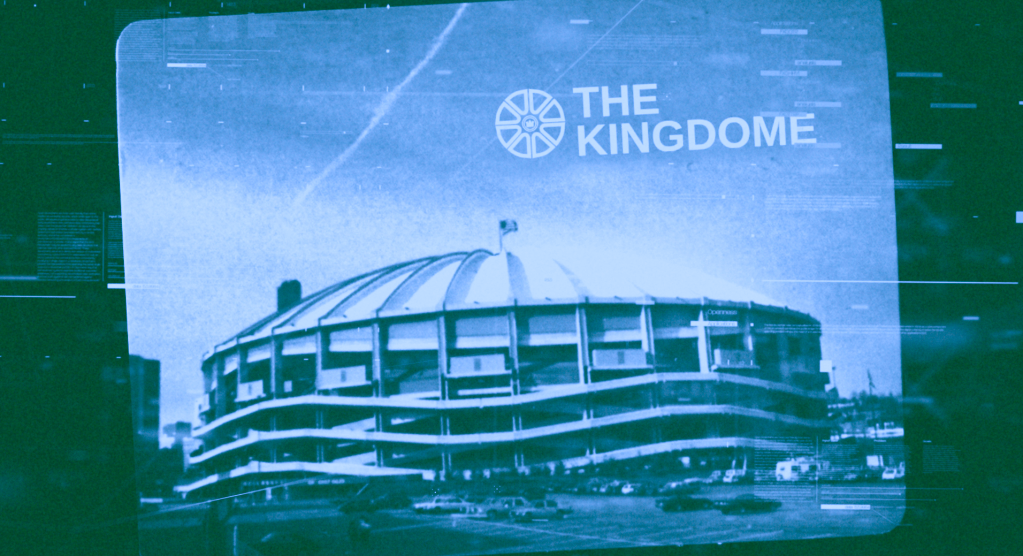
The Kingdome, located in Seattle, Washington, was a prominent multi-purpose stadium that played a significant role in the city’s sports and entertainment scene. Constructed in 1976, it stood as an architectural marvel at the time, boasting a unique circular design with a distinctive roof. The stadium’s primary purpose was to serve as the home field for the Seattle Seahawks of the National Football League (NFL) and the Seattle Mariners of Major League Baseball (MLB).
The Construction
The construction of the Kingdome was a monumental engineering feat that revolutionized stadium design. The idea of a multipurpose indoor facility in Seattle, Washington, was conceived in the 1950s as a response to the city’s need for a modern sports venue. Construction on the Kingdome began in 1972 and was completed in 1976, resulting in a colossal structure that stood as a testament to architectural innovation. The dome-shaped stadium was constructed using a unique combination of steel, concrete, and fabric materials, making it one of the largest domed structures in the world at the time. The Kingdome’s design showcased the era’s fascination with futuristic architecture. The roof of the stadium was a marvel of engineering, consisting of a Teflon-coated fiberglass fabric stretched over a network of steel cables. This innovative construction allowed for natural light to filter through, creating a bright and open atmosphere within the stadium. The immense scale of the project required the excavation of over a million cubic yards of earth and the pouring of more than 40,000 cubic yards of concrete. The final result was a domed structure that spanned 660 feet in diameter and stood 250 feet tall, capable of seating over 60,000 spectators.
The Kingdome’s construction marked a significant milestone in sports architecture and had a lasting impact on stadium design. Its multipurpose nature allowed for various sports and events to be held under one roof, eliminating the need for separate venues and providing a versatile space for the community. However, the stadium’s construction also faced challenges and controversies, including cost overruns and debates about its location. The Kingdome quickly became an iconic landmark in Seattle, capturing the imagination of sports fans and locals alike. Its seating capacity of over 66,000 (for football) allowed for large crowds to gather and cheer on their favorite teams. The venue also hosted numerous other events, including concerts, conventions, and even NCAA basketball games. In fact, the Kingdome hosted the NCAA Final Four basketball tournament three times, in 1984, ‘89, and ‘95, which further cemented its status as a versatile and popular entertainment destination.
The SuperSonics
The Seattle SuperSonics’ tenure at the Kingdome was a thrilling chapter in the team’s history and a source of immense pride for the city. From 1978 to 1985, the SuperSonics called the Kingdome their home, captivating fans with their fast-paced style of play and memorable performances. During their time at the Kingdome, the SuperSonics boasted a roster of talented players and achieved remarkable success. Led by legendary figures such as Gus Williams, Jack Sikma, and Dennis Johnson, the Sonics showcased their skills on the grand stage of the dome-shaped stadium. They made deep playoff runs, including the historic 1979 NBA Finals, where they clinched their first and only NBA championship. The team’s exciting style of play, combined with the sheer size of the Kingdome, created an awe-inspiring spectacle that left fans in awe and fueled their passion for the SuperSonics.
The Seahawks
The Seattle Seahawks’ tenure at the Kingdome was a defining period in the team’s history and played a crucial role in shaping their identity. From their inception in 1976 until 1999, the Seahawks called the Kingdome their home, thrilling fans with their passionate performances and creating an electric atmosphere within the stadium. The Kingdome became synonymous with the Seahawks, serving as the backdrop for countless memorable moments that solidified the team’s place in Seattle’s sports culture.
The Seahawks’ presence in the Kingdome was marked by remarkable players and significant milestones. Legendary figures like Steve Largent, Cortez Kennedy, and Walter Jones graced the field, leaving a lasting impact on the franchise and establishing themselves as iconic Seahawks. The team’s games at the Kingdome were known for their deafening noise levels, earning Seahawks fans the reputation of being some of the loudest in the NFL. This passionate support from the stands, combined with the team’s success on the field, created a formidable home-field advantage that opponents found difficult to overcome.
The Kingdome era for the Seahawks witnessed numerous exhilarating moments and historic achievements. The team made several playoff appearances during this time, including their first-ever postseason berth in 1983. Memorable games and iconic plays unfolded within the Kingdome’s walls, forever etching the stadium’s name in Seahawks history. The bond between the team and its fans grew stronger during these years, as the Kingdome became a symbol of unity and pride for the entire city of Seattle. The Seahawks’ time at the Kingdome laid the foundation for their future success and set the stage for their transition to their current home, CenturyLink Field (now Lumen Field), where the legacy of their Kingdome years lives on in the hearts of Seahawks faithful.
The Mariners
The Seattle Mariners’ tenure at the Kingdome marked a significant era in the team’s history and left an indelible impact on the city’s baseball culture. From their inaugural season in 1977 until 1999, the Mariners called the Kingdome their home, captivating fans with their on-field performances and establishing a dedicated fan base. During their time at the Kingdome, the Mariners witnessed both struggles and triumphs on the field. The team showcased talented players like Ken Griffey Jr., Edgar Martinez, and Randy Johnson, who became fan favorites and helped propel the Mariners to newfound success. Memorable moments unfolded within the stadium’s walls, including Griffey’s electrifying home runs, Martinez’s clutch hits, and Johnson’s dominant pitching performances. The Kingdome’s unique configuration for baseball presented challenges and advantages for the Mariners. The artificial turf, known as “AstroTurf,” influenced the style of play and added a distinctive element to the game. Bounces off the turf were unpredictable, and the speedy Mariners players often utilized the surface to their advantage. The expansive dimensions of the Kingdome allowed for thrilling defensive plays and epic home runs.
One of the most notable moments in the Kingdome’s history occurred in 1995, the Mariners achieved a historic comeback against the New York Yankees in the American League Division Series, winning a decisive Game 5 and igniting the fervor of Seattle baseball fans. However, the Kingdome faced its share of controversies and concerns. The stadium’s infrastructure and design became increasingly outdated over time, and its roof, made of fiberglass fabric, presented maintenance challenges. Safety concerns regarding seismic stability led to discussions about potential renovations or replacement. Ultimately, these concerns, coupled with the desire for a more modern sports facility, led to the Kingdome’s eventual demise.
Deterioration & Ballot Measures
The 1994 roof collapse of the Kingdome was a shocking event that shook the city of Seattle and raised concerns about the stadium’s structural integrity. On July 19, 1994, during preparations for an upcoming Seattle Mariners game, the Kingdome’s roof unexpectedly gave way under the weight of heavy rainfall. The collapse resulted in a 200-by-400-foot hole in the roof, exposing the stadium’s interior to the elements. Fortunately, no one was injured during the incident, as the stadium was unoccupied at the time.
The roof collapse prompted immediate action to assess the damage and ensure the safety of the facility. The event raised questions about the maintenance and stability of the Kingdome, which had been plagued by issues since its construction. The incident forced the cancellation of multiple Mariners’ games and displaced the team for the remainder of the season, as temporary repairs and a comprehensive inspection were conducted. The 1994 roof collapse served as a turning point for the stadium, highlighting the urgency of addressing its structural deficiencies and paving the way for a new era in Seattle’s sports infrastructure.
A 1995 ballot measure to build a new stadium for the Mariners failed to gain public support, and the situation seemed pretty bleak for the Mariners staying in Seattle. However, as mentioned after the Mariners shocked the Yankees in the ALDS, sentiment around the team staying had changed and the State of Washington approved a package that would finance the construction of a brand new baseball only stadium. This left the Seahawks as the only major tenant left in the Kingdome, and owner Ken Behring even threatened to relocate the franchise to Los Angeles if he didn’t get a new stadium built as well. But, relocating the team would prove to be much more difficult than Behing had thought, as lawyers discovered that the Seahawks were legally obligated to stay at the Kingdome until at least the 2005 season. Behring opted to eventually sell the team to Microsoft co-founder Paul Allen, who as part of the sale stipulated that a new stadium must be built using public funds if he were to buy the team. In 1997, with the threat of the Seahawks moving for good, a ballot measure passed that allowed taxpayer money to be used to build a new stadium. These measures left the Kingdome officially obsolete by the year 2000, and a date was set to tear down the once iconic venue.
The Demolition
On March 26, 2000, the Kingdome met its end through controlled implosion. It was a bittersweet moment for Seattle residents, marking the end of an era while paving the way for a new era of sports and entertainment in the city. The demolition process was meticulously planned and executed to ensure the safety of the surrounding areas. On the designated day, a series of controlled explosions caused the Kingdome’s roof to collapse inward, followed by a cloud of dust and debris that enveloped the site. The implosion lasted only a matter of seconds, but its impact was profound. The once-mighty structure was reduced to rubble, leaving behind a massive void in Seattle’s architectural landscape. The destruction of the Kingdome was a poignant moment that evoked a range of emotions, symbolizing the passing of an era and paving the way for new possibilities.
The destruction of the Kingdome made room for the construction of two state-of-the-art stadiums, CenturyLink Field for the Seahawks and T-Mobile Park for the Mariners. Although the Kingdome is no longer standing, its legacy lives on in the hearts and memories of Seattleites. The stadium holds a special place in the city’s history, serving as a symbol of sportsmanship, community, and civic pride. Many fondly recall the roar of the crowd, the excitement of game days, and the unforgettable moments that unfolded within its walls. Today, Seattle’s sports landscape continues to thrive with the presence of Lumen Field and T-Mobile Park, offering modern facilities for fans to gather and support their teams. While the Kingdome’s physical presence may be gone, its impact remains as a reminder of the rich sporting heritage and the indomitable spirit of Seattle’s residents.
As the city evolves and grows, the Kingdome stands as a testament to Seattle’s ability to adapt, innovate, and embrace change. Its story serves as a reminder that even cherished landmarks can give way to progress and new opportunities, creating a legacy that lives on in the collective memory of a community. The Kingdome will forever be a cherished part of Seattle’s history and a symbol of the city’s unwavering passion for sports and entertainment.
 All Sports History
Leave a comment